A shared control architecture from laboratory to production scale

Talamus is a bioprocess production platform developed by Pikolab Engineering. TLM series systems are configured for working volumes from 10 L to 30,000 L. On pilot and production systems, automated sterilisation in place (SIP), phase-based control and time-stamped process logging are provided according to the project scope.

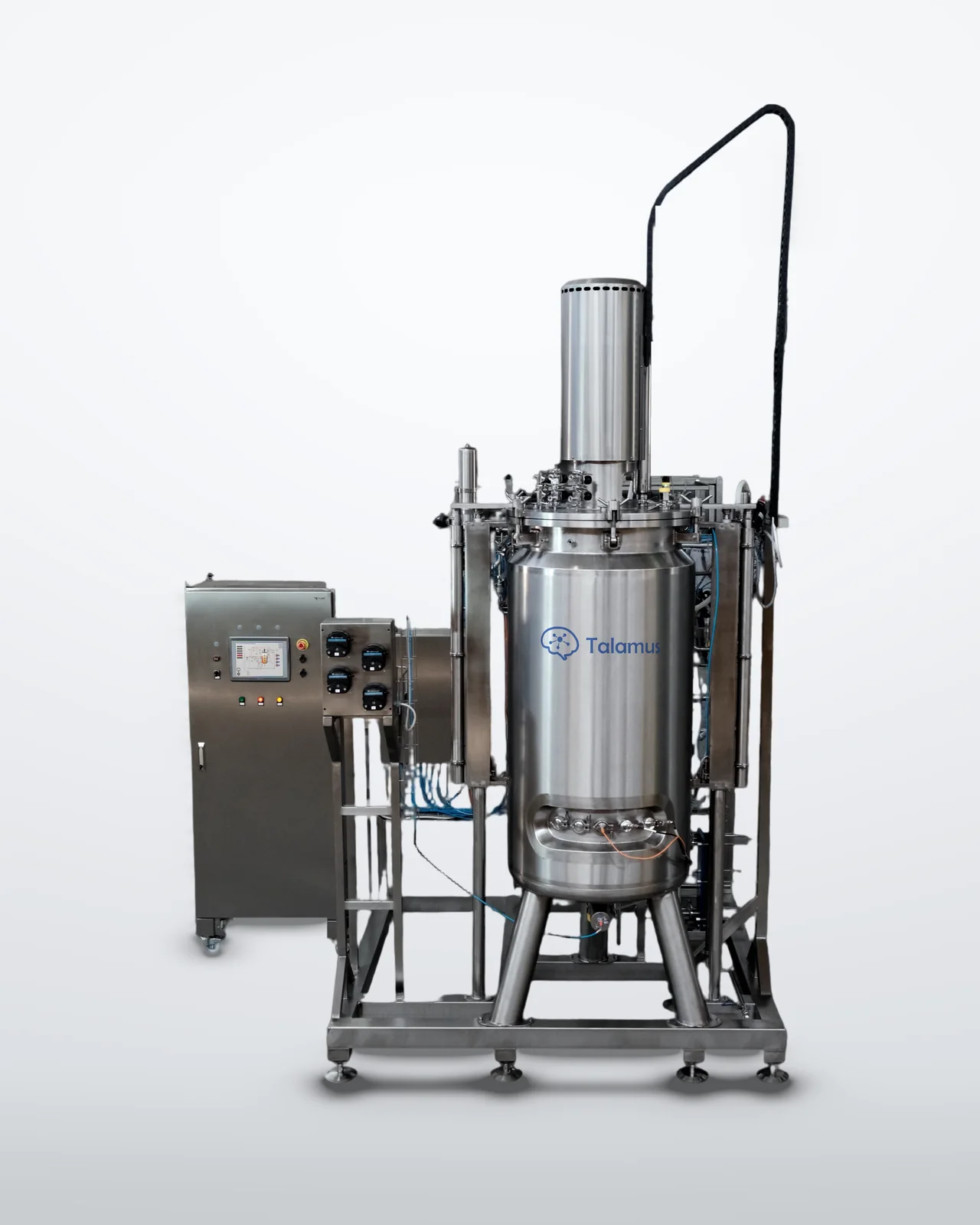
Talamus TLM500 pilot bioreactor, front view: control cabinet, pump box, jacketed stainless steel vessel and skid
TLM500 pilot bioreactor, 500 L working volume

Scale range and scale-up

As scale increases, oxygen transfer, mixing time, heat removal and CO₂ accumulation change. The software architecture and data structure are shared across scales; process data from different scales can be compared in the same structure. Vessel geometry, agitator and sparger design, heat transfer area, gas capacity and plant utilities are resized for each scale. Control parameters are also defined anew for each scale.

Silhouettes are for scale comparison; actual dimensions and H/D ratio are defined per project.
500 L, Pilot-scale systems

TLM500

View the system

In pilot systems designed for sterile operation, the sterilisation in place (SIP), cooling and cultivation phases run automatically. We deliver the systems skid-mounted with industrial-grade instrumentation.

  • TLM12020 L seed reactor + 100 L pilot reactor
  • TLM500500 L working volume (600 L total)

Scale-up criterion

The scale-up strategy is based on the organism’s oxygen demand and shear sensitivity. In this evaluation, the volumetric oxygen transfer coefficient (kLa), power per volume (P/V), tip speed, mixing time, CO₂ removal and heat load are considered together. Under geometric similarity these criteria cannot all be held constant at once; at constant P/V, for example, tip speed and mixing time increase with scale. The production reactor’s agitator, sparger and jacket are sized from pilot data.

TLM500 pilot bioreactor

The TLM500 is a jacketed, stirred pilot and pre-production reactor. It connects to plant steam, cooling water and compressed air. Sterilisation, cooling and cultivation phases are selected from the control unit; sterilisation in place (SIP) including filter lines, vacuum-protected cooling and cultivation control run automatically.

Working volume
500 L (600 L total)
Automated phases
SIP, cooling, cultivation
Product-contact material
AISI 316L
  • Closed-loop temperature control through the jacket (heating and cooling)
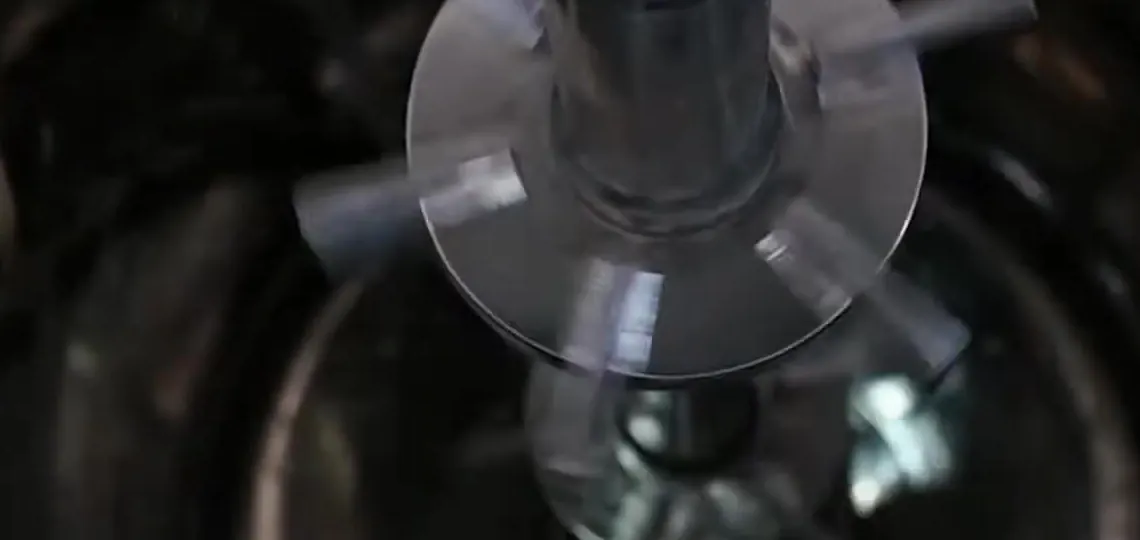
  • Mechanical agitator (impeller type and number of stages selected for the process)
  • Mass-flow-controlled aeration; air and agitation cascaded on dissolved oxygen (DO)
  • Peristaltic dosing for acid and base; threshold-based antifoam dosing
  • Lid lifting device for maintenance access; cleaning in place (CIP) equipment

Pneumatic headplate lift

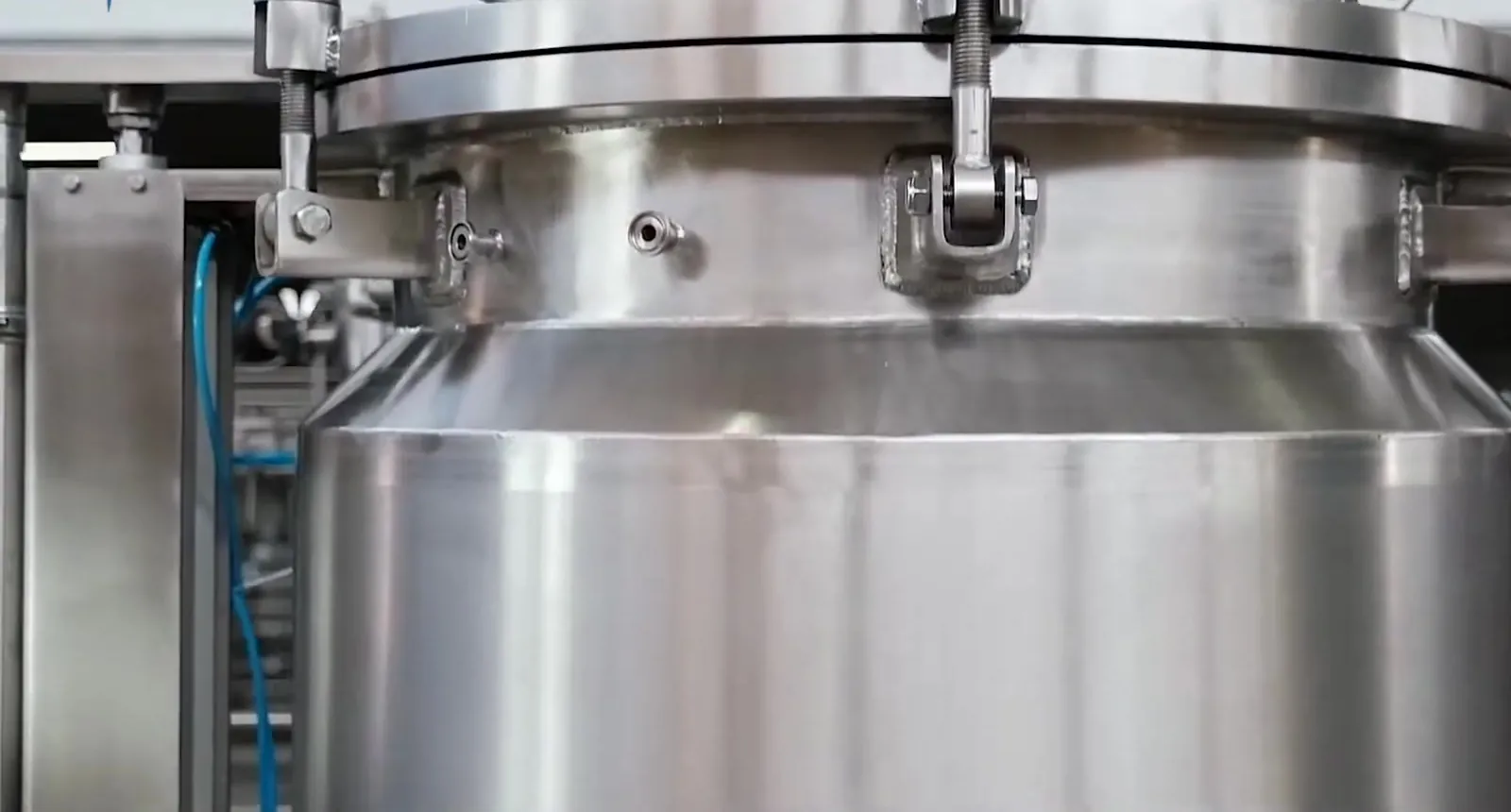
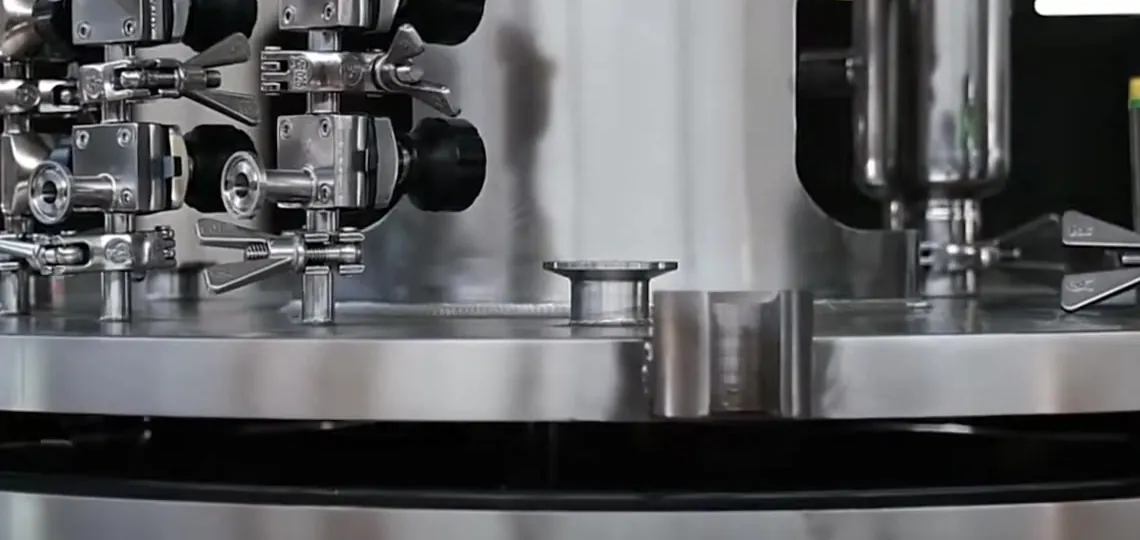
On the TLM500, the headplate is raised and lowered together with the agitator drive and the equipment mounted on it, by pneumatic cylinders on both sides of the vessel. No crane or separate lifting gear is needed; the vessel interior is directly accessible for inspection after cleaning and for agitator maintenance. This arrangement is specific to Talamus pilot systems.

TLM500 pneumatic headplate lift, front viewThe swing bolts open, the piston rods of the pneumatic cylinders on both sides of the vessel extend and the headplate rises together with the agitator drive and shaft; it then lowers and the bolts close.DriveHeadplatePneumaticcylinderVessel
Headplate closed and bolted
00Talamus
0:00 / 3:22

Phase-based process control

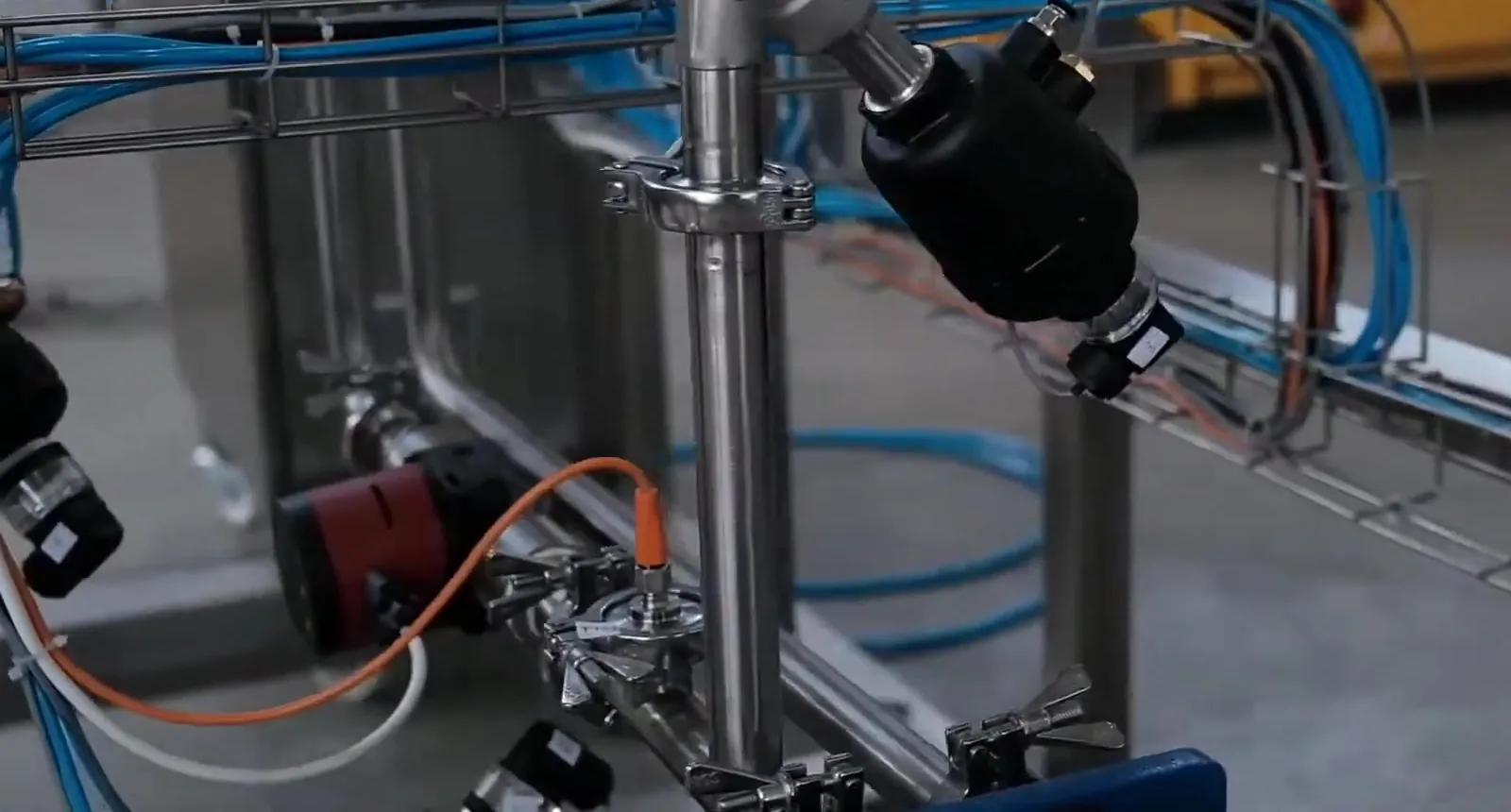
On pilot and production systems, the Talamus control unit runs on an industrial PLC with PID-based loops. Each process phase has defined valve positions, active loops, permissives and alarm thresholds; the operator does not position valves one by one.

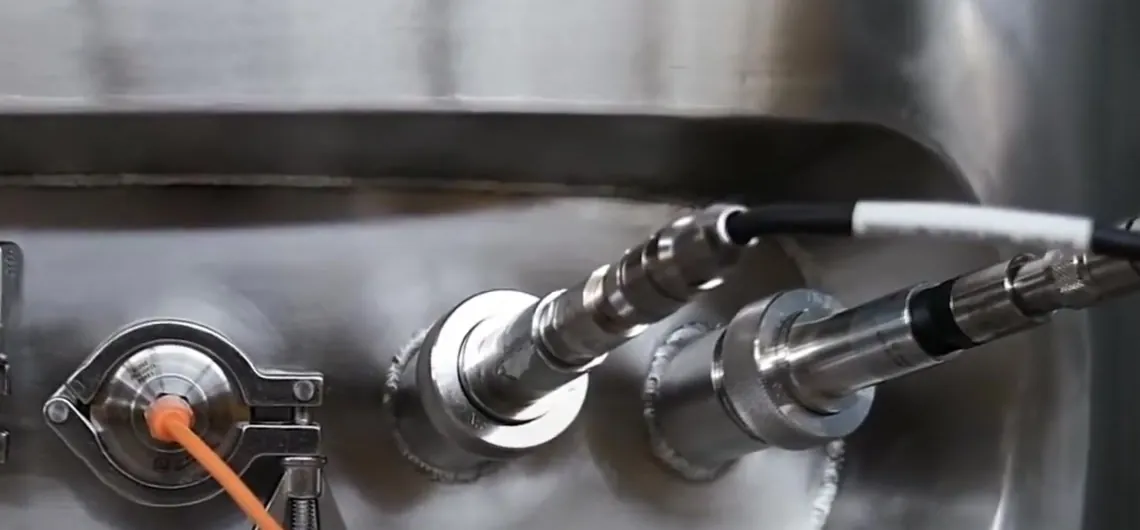
Optical DO sensor; configurable cascade control using mass-flow-controlled air supply and agitation speed.

Control loops from sensors to controller and actuatorsMeasurementControlActuationpHDissolved O₂TemperatureLevelPressureFoamPLC / PIDphase and alarmdata logHeating / coolingAcid / base pumpAir (mass flow)AgitatorAntifoamProcess valves
TtSchematic view; set points are defined in the project documentation.

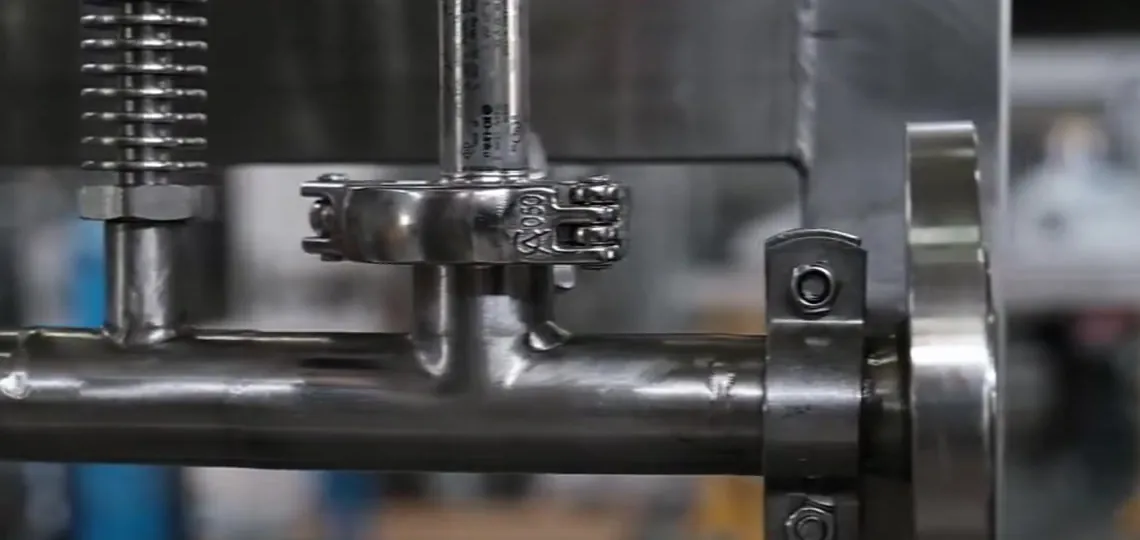
Plant steam is used for jacket heating, while the product-contact sterilisation in place (SIP) circuit uses steam of a quality suited to the process requirement. Steam distribution, condensate drainage, temperature measurement points, hold time and any required isolation or protection arrangements are defined within the project. SIP conditions are managed within equipment and sensor limits.

  • SIP including the vessel and the inlet and exhaust gas filter lines
  • Automated SIP cycle started from the control unit
  • Sterility maintained on sampling and feed lines

Measurement reliability

Control loops rely on sensor measurements; sensor drift leads directly to control error. Ageing of the sensor cap on an optical DO probe or fouling of the reference junction on a pH electrode can cause a process that appears to be on set point to deviate from it.

Measurement chain and PAT options

In addition to standard pH, DO, temperature, level and pressure, process analytical technology (PAT) options such as in-line biomass/optical density, viscosity, foam, exhaust gas analysis and dissolved CO₂ can be added. We have been installing and calibrating these instruments in food, chemical and biotechnology plants since 2011. We also commission and recalibrate the measurement chain on Talamus systems with the same team.

Predictive maintenance and decision support

QorSense is sensor and process analytics software developed by Pikolab R&D. We have begun integrating it into Talamus systems. QorSense tracks drift and noise in the raw sensor signal and derives sensor condition indicators. These indicators help set maintenance and calibration priorities and support operator decisions with process data. A patent application has been filed for the signal processing core.

Raw sensor signal
QorSenseSignal analysis
Sensor condition
87%
Remaining useful life
142 days
Drift rate
−0.02%/day
Signal quality
24.3 dB
Schematic view; indicator values are examples.

Local data storage option

The defined process variables are logged with time stamps on the control unit, can be backed up to external storage and are exported via USB flash drive or Ethernet. QorSense can run on site without a cloud connection. Where remote access, backup or a service connection is needed, we define its scope separately in the project.

Project process

  1. 01

    Requirements analysis

    We define the organism, product, target output, batch time and site utilities (steam, compressed air, cooling water, water, power, layout) together with you.

    Output User requirements specification (URS)

  2. 02

    Process design and P&ID

    We size the seed train, vessel volume, heat transfer, gas supply and agitation and prepare the Piping and Instrumentation Diagram (P&ID). We define phases, control loops, permissives, interlocks and the alarm approach in the Control Philosophy document.

    Output P&ID, layout, instrument list, Control Philosophy

  3. 03

    Fabrication

    Product-contact surfaces are made from certified AISI 316L. We document design pressure, test method and acceptance criteria for vessel and jacket to the applicable project standard. We prepare the panel, software and instrumentation in parallel with fabrication.

    Output Material certificates and test records

  4. 04

    Factory Acceptance Test (FAT)

    We run the system in the workshop before shipment and check valve sequences, phase transitions, alarms and sensor readings. Scope, acceptance criteria and customer attendance are defined in the contract.

  5. 05

    Installation and Site Acceptance Test (SAT)

    We make the plant connections and calibrate the sensors. Within the Site Acceptance Test (SAT), we check plant connections, I/O, phases and alarms and carry out water runs. Where qualification is required, we define the design, installation and operational qualification (DQ/IQ/OQ) documents separately.

  6. 06

    Training

    We prepare training content separately for operators, maintenance staff and process owners. It covers phase operation, set point management, calibration, alarm handling and basic troubleshooting.

  7. 07

    Service

    We provide planned maintenance, sensor recalibration and field support through our teams in İzmir and Manisa.
Development and manufacturing structure

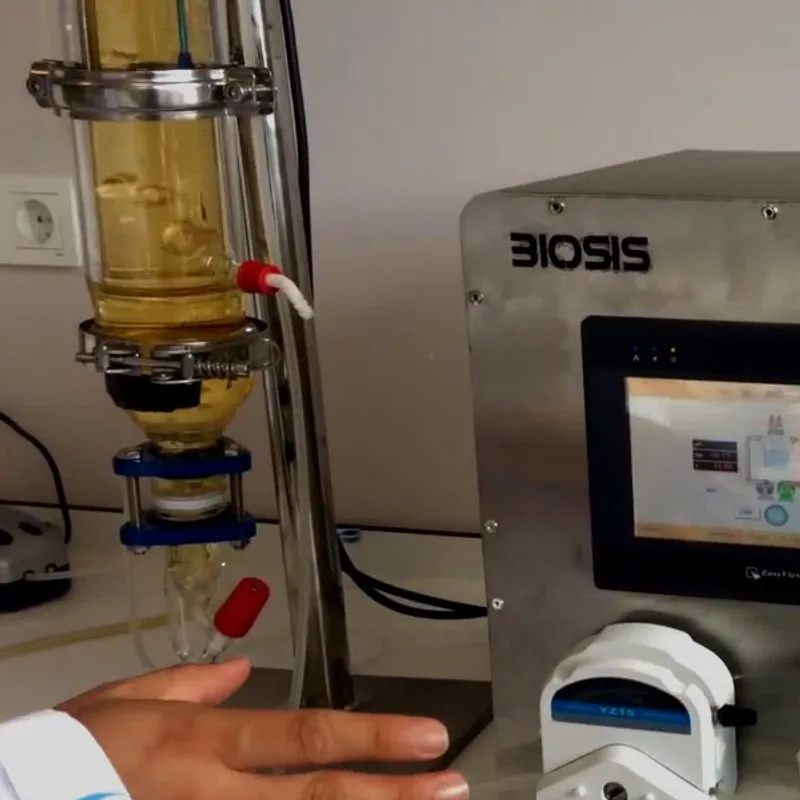
Development of the Talamus bioreactor systems is carried out as a joint project of Pikolab Engineering and Pikolab R&D. At Pikolab, our work on bioreactor control systems goes back to the BioSIS recording and control system we introduced in 2013. The recording and control unit of Talamus laboratory systems is based on the BioSIS architecture.

System design, manufacturing and service, İzmir

Pikolab Engineering

At Pikolab Engineering, we have worked in process instrumentation and process analytical technology (PAT) since 2011. For Talamus systems, we carry out process engineering, mechanical design, fabrication, instrumentation integration, commissioning, sales and service.

info@pikolab.compat.pikolab.com
Process control, process analytics and decision support software, Manisa

Pikolab R&D

At Pikolab R&D, we develop process control, process analytics, automation and decision support software. The company was founded at Manisa Technopark in 2025, based on the field experience of Pikolab Engineering. We are responsible for developing the control and data layer of Talamus systems and the QorSense technology.

arge@pikolab.comarge.pikolab.com

Technical consultation request

Information on the application, target scale and site conditions is sufficient for an initial assessment. In the first meeting we set out a framework for scale, configuration and site requirements.