Yeast and yeast products
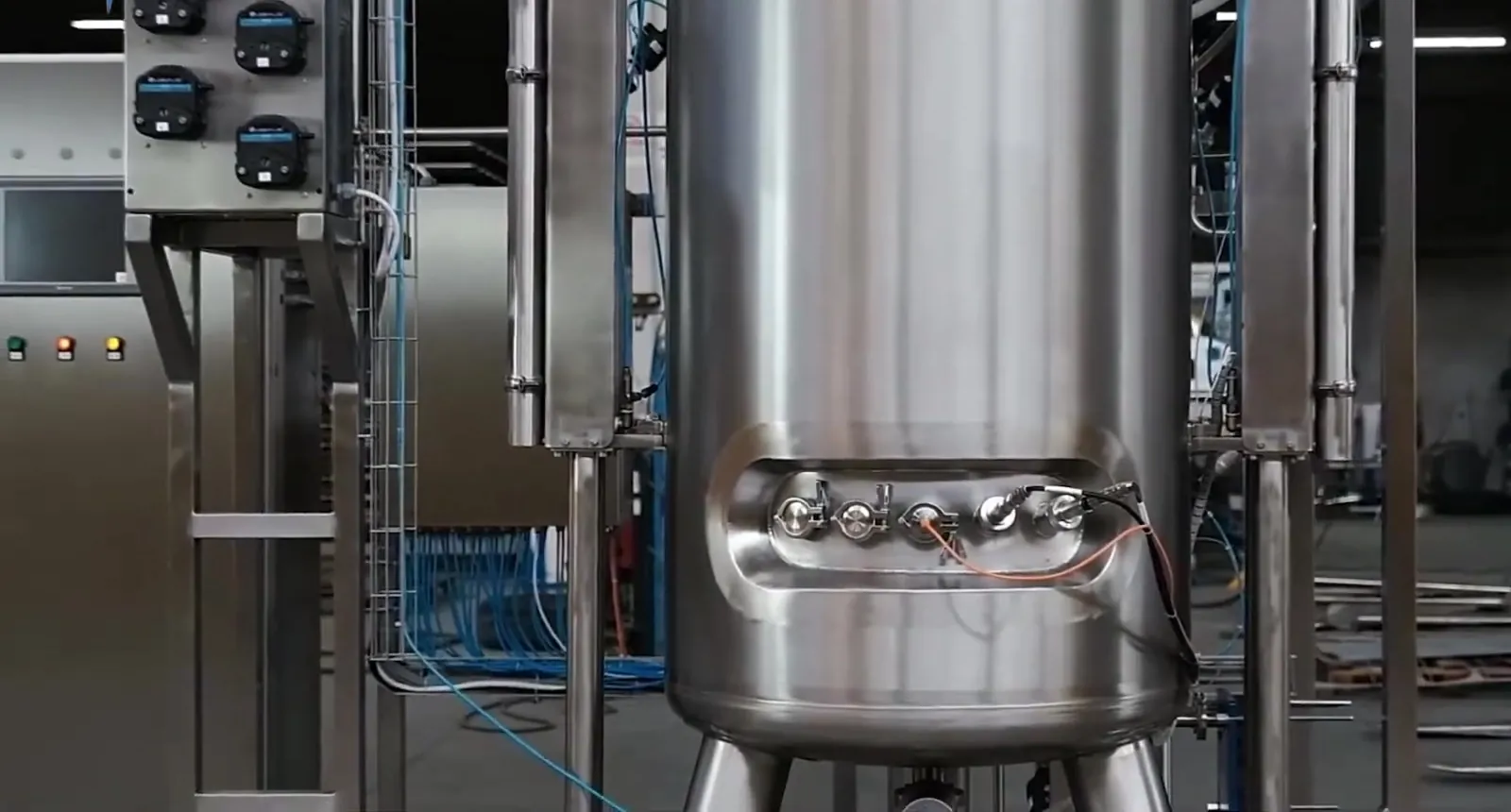
In baker’s yeast, feed yeast and yeast extract processes, the product is mostly Saccharomyces cerevisiae biomass and the goal is to convert sugar into biomass. When the glucose concentration exceeds a certain threshold, S. cerevisiae produces ethanol even in the presence of oxygen (Crabtree effect); because part of the sugar is diverted to ethanol, biomass yield falls. Production is therefore run in fed-batch mode, which keeps the sugar concentration low. With complex carbon sources such as molasses, feeding and foam management are planned together.
Application-specific process requirements
Crabtree effect and feed control
The feed rate is increased exponentially so that the specific growth rate stays below the critical value. The respiratory quotient (RQ) is the ratio of the CO₂ evolution rate (CER) to the oxygen uptake rate (OUR) and is calculated from exhaust gas analysis. When RQ rises clearly above 1, ethanol formation has started; this signal is used to correct the feed rate. Exhaust gas analysis is added to Talamus systems as a PAT option.
Oxygen demand and heat load
Respiratory metabolism has a high oxygen demand and high metabolic heat. In aerobic cultures the heat released is proportional to the oxygen consumed (about 460 kJ/mol O₂); the heat load is therefore estimated from the OUR. At production scale, cooling capacity often limits the feed rate and therefore the batch time. We size the cooling system for the heat load and for the cooling water inlet temperature, which varies with the season.
Molasses, foam and pH
Foaming is high in molasses media; foam is controlled by threshold-based antifoam dosing. When pH is held with ammonium hydroxide, the nitrogen source is supplied through the same line.
Harvest and subsequent steps
Biomass is separated by centrifugation to obtain cream yeast. The scope of drying, autolysis or plasmolysis steps is defined separately in the project.
Production methods used
Talamus models for this application
| Model | Scale | Working volume | Sterilisation | Delivery | Control structure |
|---|---|---|---|---|---|
| TLM Lab | Laboratory systems | Laboratory scale; vessel volume and number of parallel reactors per configuration | Autoclave | Benchtop | Shared loop and data structure |
| TLM500 | Pilot-scale systems | 500 L working volume (600 L total) | Automated SIP | Skid-mounted | Shared phase, loop and data structure |
| TLM Industrial | Industrial systems | 1,000 L – 30,000 L working volume | SIP/CIP, per project | Line engineered per project | Shared phase, loop and data structure |
Technical consultation request
Information on the strain, carbon source, target product (cream yeast, dry yeast or yeast extract) and annual production target is sufficient for an initial assessment.