Industrial systems

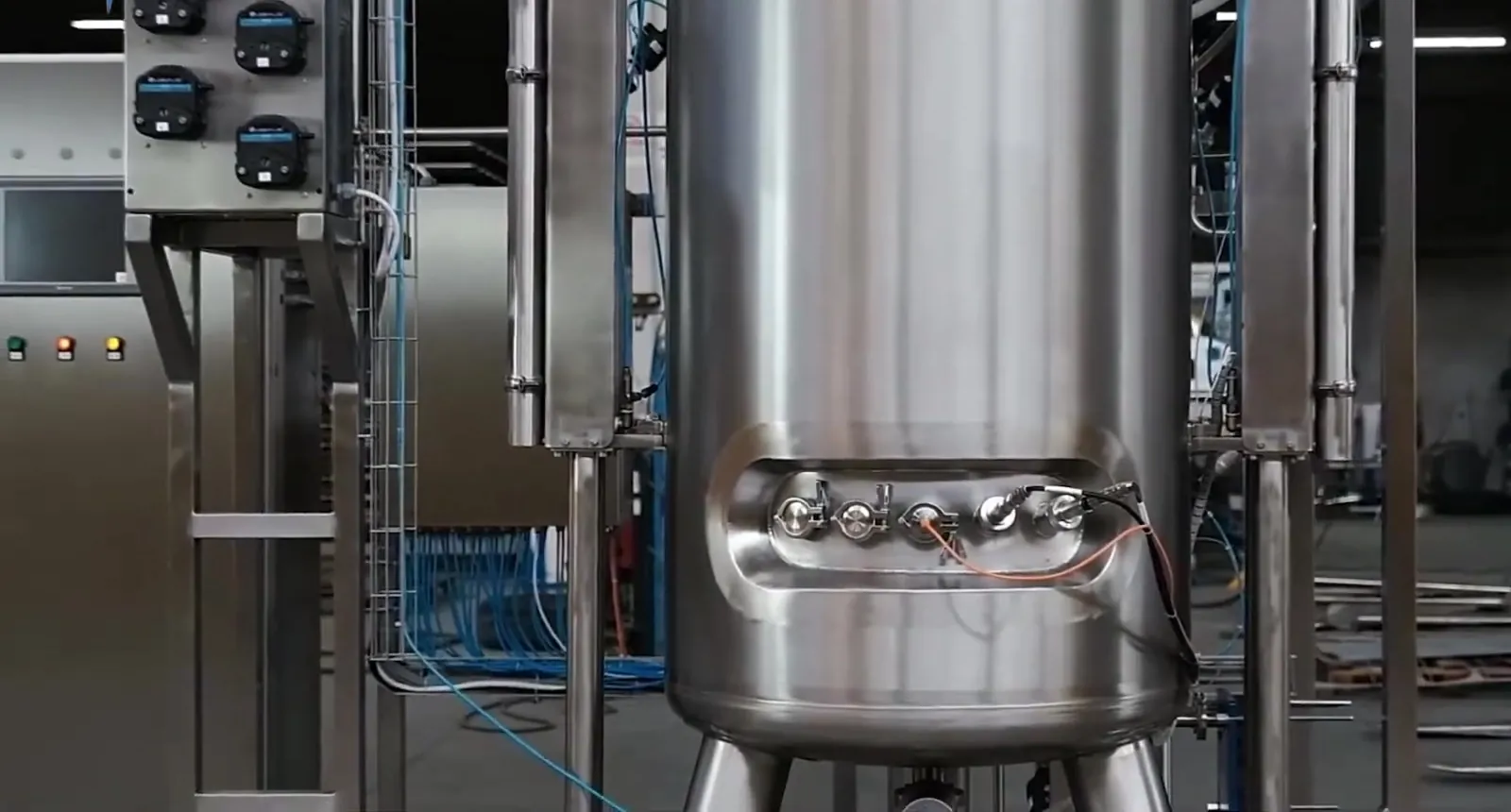
Pilot vessel detail. Industrial lines are designed per project.

We engineer industrial systems per project. The seed train, production reactor, feed and harvest vessels, piping and automation are defined in one Piping and Instrumentation Diagram (P&ID). We use the control strategy developed at pilot scale as the starting point for production-scale design. We define PID tuning, gas strategy, interlocks and equipment sizing anew for production scale.

Request a technical consultationFor biofertiliser, probiotic, enzyme and yeast producers and organisations planning a new production facility.

TLM Industrial

1,000 L – 30,000 L working volume

TLM Industrial is a fermentation line engineered for the production target and plant conditions. The scope includes the reactor, feed and harvest vessels, piping, automation and commissioning. We define battery limits in the quotation item by item: process equipment, piping, automation, site installation and commissioning.

  • We prepare the Piping and Instrumentation Diagram (P&ID) and layout per project
  • Sterile transfer from seed stages to the production reactor
  • Integration with plant steam, water and air infrastructure
  • We run installation, training, testing and service on one project plan and responsibility matrix

Automated SIP, cooling and cultivation phases

The operator selects the process phase; the related valve positions, permissives and control loops engage in a defined sequence.

TtSchematic view; set points are defined in the project documentation.

Plant steam is used for jacket heating, while the product-contact sterilisation in place (SIP) circuit uses steam of a quality suited to the process requirement. Steam distribution, condensate drainage, temperature measurement points, hold time and any required isolation or protection arrangements are defined within the project. SIP conditions are managed within equipment and sensor limits.

  • SIP including the vessel and the inlet and exhaust gas filter lines
  • Automated SIP cycle started from the control unit
  • Sterility maintained on sampling and feed lines

TLM Industrial project scope

Materials and design conditions

  • Project-specific material selection for product-contact surfaces
  • Design pressure and temperature defined per project
  • Target surface finish (Ra) stated in the project documentation

Fabrication documentation

  • Welding and material documentation
  • Pressure test method and acceptance criteria set to the applicable project standard
  • Safety valves and pressure equipment conformity

Sterilisation and cleaning

  • Sterilisation in place (SIP) and cleaning in place (CIP) boundaries defined in the project
  • CIP return, drainage and exhaust gas filter design
  • Hygienic design that minimises dead volumes; acceptance criteria defined in the project documentation

Automation and validation

  • Software and data architecture shared with the pilot systems; settings defined anew for production scale
  • Factory and site acceptance tests (FAT/SAT)
  • DQ/IQ/OQ qualification documents defined separately where required

Quotation and basic engineering studies

  • Annual capacity and batch time calculation
  • Seed train and stage volumes
  • Mass and energy balance
  • Scope distinction between the process flow diagram (PFD) and the Piping and Instrumentation Diagram (P&ID)
  • Steam, water, air and power consumption
  • Contamination control
  • Redundancy and maintenance access

Site conditions defined before installation

We review the plant utility values in the first meeting and define them in the project documentation.

  • Plant steam: availability, pressure and quality
  • Compressed air: flow, pressure and oil-free/dry conditions
  • Cooling water or chiller capacity
  • Water quality, flow and pressure required for process and cleaning
  • Electrical infrastructure and panel location
  • Layout: skid, control unit and service clearances

Technical consultation request

Information on the annual production target, batch time, site utilities and validation expectations is sufficient for an initial assessment.