Laboratory systems

Talamus benchtop bioreactor

In a scale-up study, the first process data are obtained at laboratory scale. Talamus benchtop reactors use the same software and data structure as the pilot systems. The pH, temperature, oxygen and feeding data obtained in the lab are used as starting data for pilot-scale design. Control settings and gas and feed limits are defined anew at pilot scale. BioSIS, the recording and control unit of the laboratory systems, has been used in university laboratories since 2013.

Request a technical consultationFor university laboratories, R&D centres and strain and medium development teams.

TLM Lab

Laboratory scale; vessel volume and number of parallel reactors per configuration

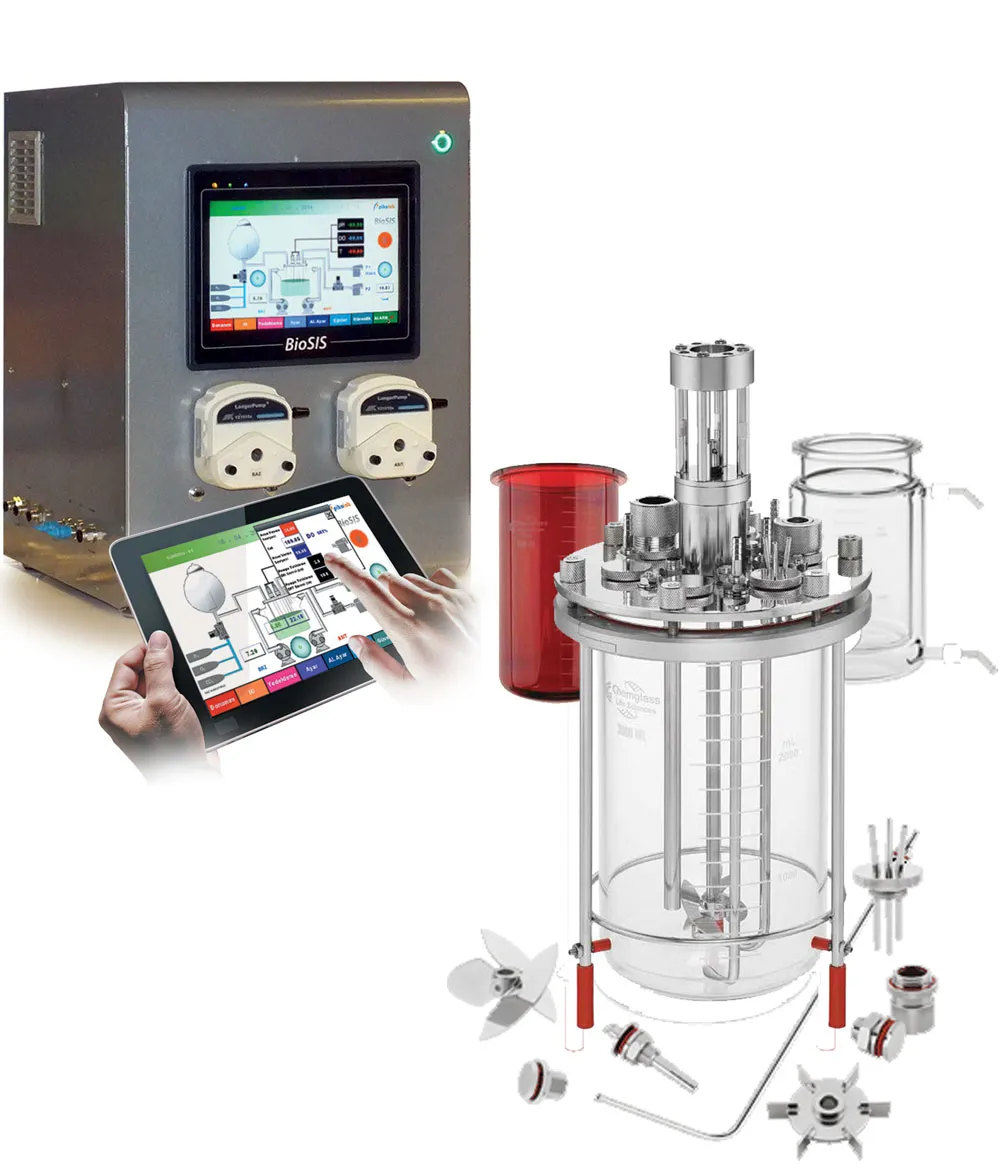
TLM Lab is a benchtop bioreactor for research and process development. All parts of the modular reactor are autoclavable. The port layout is configured within the project. The system operates with the BioSIS recording and control unit; one or more reactors are run from a single control unit.

  • The BioSIS BS-41 configuration records and controls four bioreactors at the same time
  • Data tables and charts on the touch screen

BioSIS Airlift

Laboratory-scale photobioreactor; 1.8 L (internally illuminated airlift) and 6 L (flat panel) working volume in published studies

BioSIS Airlift consists of a glass airlift column photobioreactor for microalgae and cyanobacteria studies and the BioSIS recording and control unit. The BioSIS controller has been used in peer-reviewed studies run with airlift and flat-panel photobioreactors.

  • Glass airlift column; culture mixing and gas transfer are provided by air bubbles
  • Online measurement with a combined temperature-dissolved oxygen probe and a pH probe
  • Two peristaltic pumps for acid and base; pH is held at set point
  • Process diagram, trend charts and data logging on the touch screen
  • Control unit used with flat-panel and internally illuminated airlift photobioreactor configurations

TLM Lab construction and options

Vessel and materials

  • Modular reactor with all parts autoclavable
  • Port layout for sensors, feeds, gas and sampling configured per project
  • Vessel material and working volume are stated in the model technical document we share on request

Agitation and gas

  • Agitation speed is closed-loop controlled; the speed range is stated in the model technical document
  • Gas supply and mixing scope (air, O₂, N₂, CO₂) is defined per configuration
  • The number of feed and dosing pumps is selected as required

Measurement and control

  • PID control of pH, dissolved oxygen, temperature and agitation speed
  • Level monitoring
  • Optional conductivity, optical density, biomass, exhaust gas analysis and feed rate measurement

Software and data

  • BioSIS recording and control unit; data structure shared with the pilot systems
  • Time-stamped data logging; export via USB flash drive or Ethernet
  • High and low limit alarms for each parameter and a hardware alarm when no data arrives from a sensor; all alarms are recorded
  • Authorisation for up to 12 users; monitoring over the local network or a secure connection

Technical consultation request

Information on the vessel volume, culture type (microbial or photosynthetic), parameters to be measured and number of parallel reactors is sufficient for an initial assessment.